November 7, 2026
Sense of Place
An essay on the place where experience creates identity. This is the fifth essay in the Strategy. Culture. Identity. series.
November 7, 2026
An essay on the place where experience creates identity. This is the fifth essay in the Strategy. Culture. Identity. series.
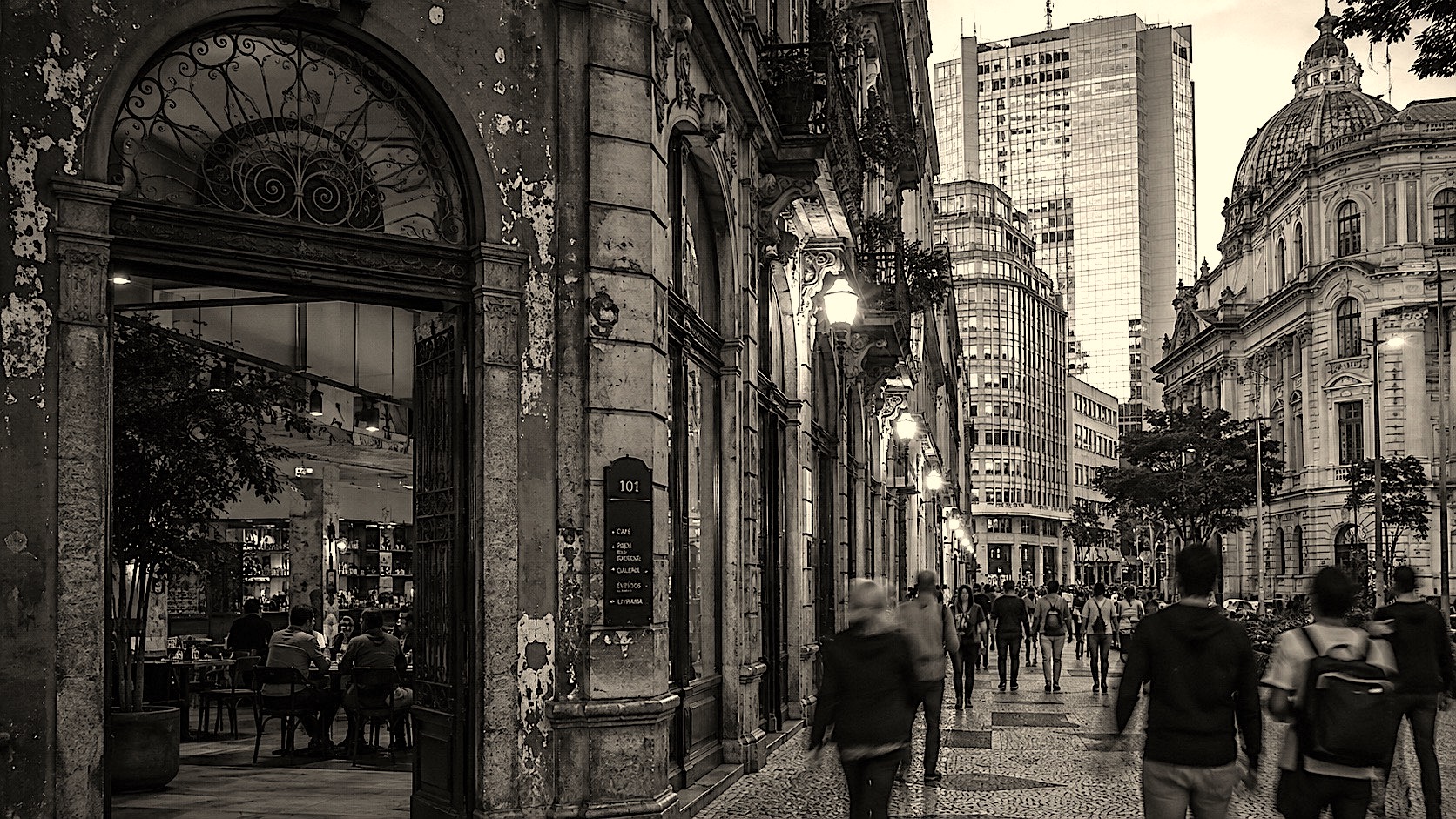
Sense of Place
INTRODUCTION
A city is not made only of buildings, streets, and squares. It is made of the stories these places carry, the experiences they offer, and the bonds they are able to establish with those who inhabit them. When memory meets experience, space ceases to be merely space and begins to acquire an identity. It is in this territory that Sense of Place is born.
This essay takes that idea as its starting point to look at São Paulo and, in particular, its historic hill, where the city was born and where memory, abandonment, and possibilities for transformation coexist today. More than restoring buildings, this is about recognizing what still gives meaning to the territory and understanding how that meaning can help shape its future.
Perhaps reactivating a place begins with listening again to what it still has to tell us.
TEXT
A city is not only what we can measure. It is also what we can remember. A street may be a passageway, but it may also be the place where a story unfolded. A square may be simply a public space, but it may hold generations of encounters. A building may lose its original function without necessarily losing its meaning. It is this invisible layer, built through the overlapping of memory, experience, and culture, that transforms space into place. Sense of Place is, above all, the perception that a territory has an identity that extends beyond its physical dimensions.
For a long time, part of Brazilian society seemed to view the past as an obstacle to the future. The iconoclastic spirit that accompanied certain moments of our modernization was not the result of a single intention. Different economic, political, urban planning, ideological, and cultural forces converged at different times to assign greater value to the new than to what already existed. Heritage often came to be perceived as something that had to be overcome for the city to assert its modernity. The result was the severing of ties with places that held part of our collective memory.
Perhaps we need to move beyond this iconoclastic reaction. Not to turn the city into a monument to the past, nor to prevent its transformation, but to understand that a society that fails to recognize value in what shaped it also loses part of its ability to understand what it wishes to become. Preserving does not mean freezing in place. It means recognizing. A mature city does not need to erase its contradictions to build its identity; it needs to be able to incorporate them into its memory. The history of a place does not belong exclusively to those who own it, nor to a particular generation, nor to a particular political or economic outlook. It belongs to the cultural continuity of a society.
São Paulo offers a particularly eloquent example of this rupture. On the historic hill where the city was born, the area known as Centro Velho brings together layers of a history that helped shape the city itself. Over the decades, urban, economic, and social transformations shifted flows, activities, and populations to other areas. The territory lost some of its central role in everyday life and, with it, some of its meaning. The abandonment was not merely physical. It was also symbolic. When a population stops recognizing a particular territory as part of its contemporary experience, the place begins to disappear from the city even before its buildings disappear.
But it is precisely at this point that a possibility emerges. The movement to restore the city center can be more than a succession of construction projects, restorations, or new developments. It can represent an opportunity for the city to reconnect with its own memory. Buildings can be given new uses, public spaces can regain their vitality, and new generations can once again experience places that had, for a time, ceased to be part of their everyday lives.
The experience of Spain’s Paradores de Turismo helps broaden this understanding. My research into the Paradores revealed an approach in which heritage, tourism, hospitality, and territorial development can be part of a single strategy. Heritage does not need to remain frozen to continue being heritage. It can take on a new function and offer a new experience without losing its identity. And, more importantly, the value of a place is not necessarily contained within a building. It may lie in a landscape, a hill, a square, a path, or an event that the territory witnessed.
The Parador de Toledo is a powerful illustration of this possibility. Situated facing the historic city, the development does not depend on occupying a monument to create its experience. Its contemporary architecture creates the conditions for visitors to contemplate, interpret, and experience the heritage before them. The place is valued not only for what it contains, but for what it allows us to perceive. Not all heritage needs to be restored. Some places need to be recognized.
This perspective is especially important for São Paulo. Perhaps we should ask not only which buildings can be restored, but also which stories, landscapes, routes, and spaces can once again generate meaning. There are places that have lost their function but not their history. There are buildings that have lost their original use but need not lose their identity. There are territories that have been abandoned but can still be lived in again.
Because Sense of Place is not an aesthetic. It is a relationship born when territory meets human experience and, through that relationship, produces recognition. When someone can look at a particular place and think, “This, too, is part of who we are,” space ceases to be merely a backdrop. It becomes part of identity.
Perhaps this is the first step a city must take if it wishes to build its future without definitively breaking with what shaped it: to recognize the place once again. But recognition is only the beginning. When memory, experience, and identity reconnect with the territory, the possibility of a larger movement opens up: transforming recognition into belonging, belonging into experience, and experience into new forms of urban life. From this movement comes the Reactivation Spiral, the subject of the next Notebook. Because a place is not truly transformed when we merely restore what it has lost, but when we create the conditions for it to generate life again.
